

817 Biz polled several bankers about their views on the banking industry in Tarrant County during 2026. Participants are J.T. Aughinbaugh, Fort Worth Market Manager, J.P. Morgan Private Bank, and Vice Chair of JPMorganChase’s Market Leadership Team in north Texas; Marcus Morris, Regional CEO, First Financial Bank; and Jennifer Baggs Kamacioglu, Fort Worth Middle Market Leader and Market President, Texas Capital Bank. Responses have been lightly edited for style and clarity.
Would you consider your bank more savings and loans, more commercial or some of both?
JTA: J.P. Morgan Private Bank offers a comprehensive suite of wealth management services, from investment management and financial planning to lending, banking and trust and estate expertise. Whether clients are seeking liquidity for new investments, planning for their children’s future, or shaping their philanthropic legacy, our advisors deliver tailored strategies to help them achieve their financial goals.
MM: First Financial is very much a full-service community bank, but it has a strong commercial banking foundation. We serve businesses ranging from small family-owned companies to larger middle-market organizations, while also providing the consumer banking, mortgage, treasury management and wealth management services that individuals and families need. Our goal is to be a financial partner throughout the lifecycle of a customer relationship, whether they are growing a business, managing personal finances or planning for future generations.
What differentiates us is our relationship-driven approach. We combine the capabilities and expertise of a larger institution with local decision-making and bankers who live and work in the communities they serve.
JBK: Texas Capital is the only full-service financial services firm founded and headquartered in Texas, and we continue to focus on combining local expertise with national reach to become clients’ trusted strategic advisor throughout their personal and professional lifecycles. What sets us apart is our ability to move beyond traditional lending. We combine our deep commercial banking roots with investment banking, private wealth and access to global capital sources.
What are your customers’ top concerns today, and how have those concerns changed during the past year?
JTA: Our clients are focused on navigating market volatility, rising interest rates and global economic uncertainty. Over the past year, their concerns have shifted from inflation and supply chain disruptions to questions about long-term growth, portfolio resilience and opportunities in a changing landscape. Many are also seeking guidance on generational wealth planning and how to adapt their strategies for an evolving world.
MM: Business owners continue to focus on labor availability, inflationary pressures and the overall cost of operating their businesses. Interest rates remain an important consideration, but the conversation has shifted from reacting to rapid rate changes toward planning for future growth and capital needs.
The past year, we have noticed customers becoming more optimistic about expansion opportunities, while still maintaining a disciplined approach to costs and cash flow management. Many are looking for guidance on navigating economic uncertainty and making strategic investments that position their businesses for long-term success.
JBK: A year ago, most conversations centered on tariffs. Today, the concern is much broader: overall economic uncertainty. Our clients are navigating rising labor costs, volatile commodity markets, pricing pressures and softer consumer spending, all while trying to make decisions in an increasingly unpredictable environment. Even sectors that have been resilient are showing signs of moderation.
The common thread across industries is a loss of visibility. Business leaders built their success on the ability to anticipate market conditions and plan ahead, but many now struggle to forecast beyond the next quarter with confidence. As a result, decisions that would typically be strategic and growth-oriented are becoming more tactical and reactive, focused on managing immediate operational challenges. While the specific headlines have changed the past year, the underlying concern remains the same: uncertainty is making it much harder for companies to plan for the future.
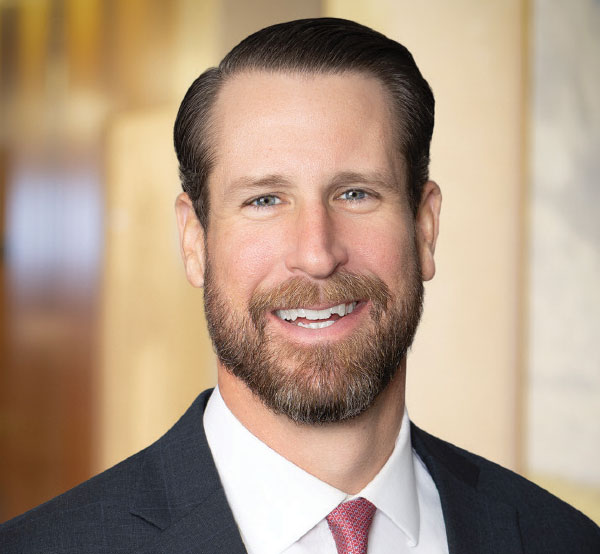
J.T. Aughinbaugh
Fort Worth Market Manager, J.P. Morgan Private Bank, and Vice Chair of JPMorganChase’s Market Leadership Team in North Texas
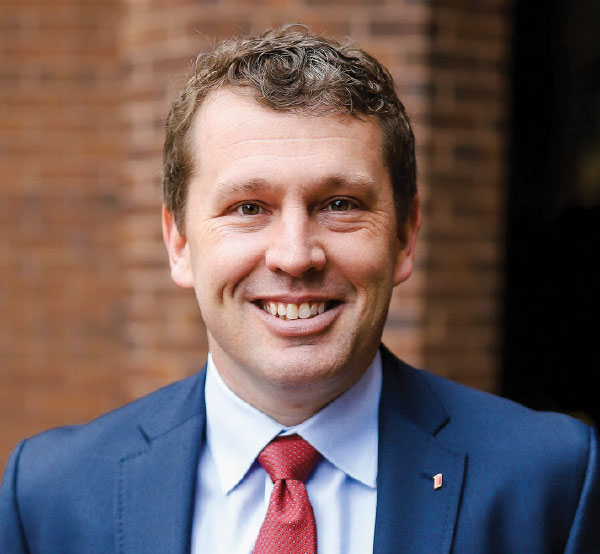
Marcus Morris
Regional CEO, First Financial Bank
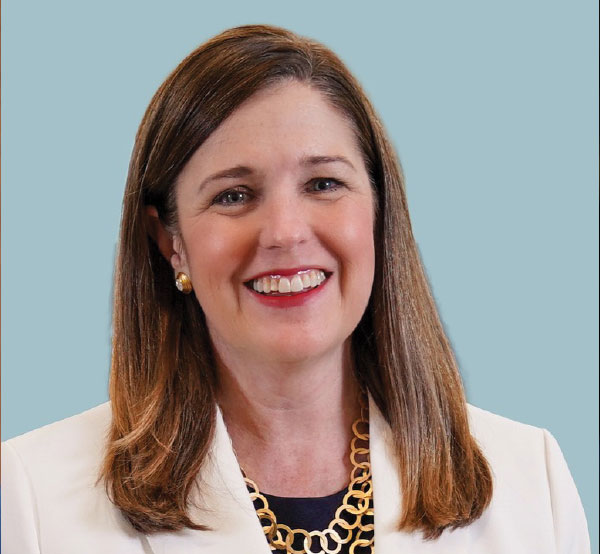
Jennifer Baggs Kamacioglu
Fort Worth Middle Market Leader and Market President, Texas Capital Bank
Which industries or types of borrowers appear strongest in Tarrant County?
JTA: Tarrant County’s economic diversity continues to support growth in aerospace, manufacturing, logistics, healthcare and professional services. We see strong activity in firms advancing infrastructure, healthcare innovation and high-value manufacturing, reflecting the region’s long-term momentum.
MM: Tarrant County continues to benefit from a diverse economy, which is one of its greatest strengths. We see significant activity among professional services firms, healthcare providers, logistics and transportation companies, manufacturers and businesses tied to ongoing population growth throughout north Texas.
Additionally, commercial real estate projects with strong sponsorship and clear demand drivers continue to perform well. The region’s business-friendly environment and steady influx of new residents and employers create opportunities across numerous industries rather than concentrating growth in a single sector.
JBK: Aerospace and defense, industrial and logistics real estate, and healthcare and life sciences stand out as strong sectors in Tarrant County. But what is most interesting is that industry is no longer the primary differentiator.
The companies performing best right now are the ones with strong cash flow and balance sheets that were not over-leveraged during the boom years. Those businesses have the flexibility to keep investing and growing even when visibility is limited. We see those qualities across every industry, which is why at Texas Capital we focus less on the sector and more on a company’s underlying financial strength and ability to adapt in uncertain times.
Is there an industry your bank is exercising more caution with?
JTA: Each client’s risk profile and goals are distinct. We tailor our guidance to individual circumstances rather than make broad generalizations about any industry.
What are business owners telling you about their willingness to borrow, invest and expand?
JTA: Business owners remain thoughtful about borrowing, investing and expanding in the current environment. Many are weighing opportunities for growth against market uncertainty, focusing on strategic investments and prudent capital management. Clients continue to seek guidance on positioning their businesses for long-term success amid a dynamic market environment.
JBK: We are seeing a greater willingness to borrow and invest than we were a year ago, particularly among companies with the cash flow and balance sheet strength to support expansion. Stable interest rates have helped make the debt-service math more predictable, so access to capital is not the primary obstacle.
What has changed is the nature of that investment. Most expansion today is driven by immediate business needs rather than long-term strategic initiatives. Companies are adding capacity because existing demand requires it and they need to continue serving customers effectively. By contrast, expansion into new geographic markets, new product lines or other growth-oriented opportunities has slowed considerably.
The key constraint is not capital, it is confidence. Business owners are willing to invest when the need is clear and unavoidable, but they are far more hesitant to commit to projects that depend on assumptions about where the economy will be six or 12 months from now. As a result, investment remains active, but it is largely reactive rather than proactive.
Is artificial intelligence changing your bank, and if so, how?
JTA: JPMorganChase has been investing in AI and machine learning for more than a decade, and today we’re using those capabilities across areas including fraud prevention, credit, operations, software development, risk management and personalization. Using AI helps our employees be more efficient—helping them spend less time on routine tasks and more time focused on what matters most: serving our customers and clients.
We see technology as a way to empower our employees to deliver an even better client experience. That said, relationships will always be at the heart of what we do. AI can help give our teams better tools and insights, but it doesn’t replace the judgment, expertise and personal relationships our clients value.
MM: Artificial intelligence is already influencing many aspects of banking, and we believe its greatest value lies in helping bankers serve customers more effectively. AI can assist with data analysis, operational efficiency, fraud detection and the automation of routine processes, allowing employees to spend more time focused on customer relationships and complex problem-solving.
We view AI as a tool that enhances human expertise rather than replaces it. Banking remains a relationship business, and customers still value trusted advisors who can provide judgment, perspective and personalized guidance.
The financial interest in D-FW has been heightened with “Y’all Street.” What is the potential impact?
JTA: The momentum around “Y’all Street” is exciting and reflects what we’ve believed for a long time — Dallas-Fort Worth is one of the country’s most dynamic business and financial centers. JPMorganChase has been a part of Y’all Street’s growth story since the beginning. We’ve been doing business in Texas for more than 155 years and recognized the potential of D-FW decades ago. In 2003, we had about 4,000 employees across the Metroplex; by 2014, that had grown to 13,000, and today we have about 18,500. Our 50-acre Plano campus has grown from about 6,000 employees when it opened in 2017 to roughly 12,000 today, and we continue to have a meaningful presence in downtown Fort Worth and downtown Dallas.
We’re continuing to invest alongside the region as that momentum accelerates. Our Private Bank client-facing teams in D-FW, for example, are expected to grow by about 40% by 2030. We’re also investing in a new Fort Worth office at The Crescent that we’ll move into in about a year, further demonstrating our long-term commitment to Tarrant County clients. The continued growth of Y’all Street has the potential to attract even more companies, investment and talent to north Texas, creating opportunities that extend well beyond financial services. With the state’s pro-business environment, strong infrastructure and deep talent pipeline, D-FW is incredibly well positioned to continue growing as a financial center with national and global significance.
MM: The increased concentration of financial firms relocating or expanding in north Texas reinforces D-FW’s position as one of the country’s most important economic centers. As more financial institutions, investment firms and corporate headquarters establish a presence here, the region benefits from new jobs, increased investment and a deeper talent pool.
For community-focused banks like First Financial, this growth creates opportunities to support the businesses, professionals and entrepreneurs driving the region’s success. While competition increases, the overall impact is overwhelmingly positive because it reflects confidence in the long-term strength of the economy and its ability to attract people, capital and innovation.
JBK: The rise of “Y’all Street” represents a significant opportunity for D-FW and, by extension, Tarrant County. Major financial institutions, investment firms, wealth managers and capital markets businesses continue to expand across north Texas, attracted by the region’s talent base, business-friendly environment, central location and quality of life. D-FW has emerged as one of the nation’s leading financial centers, with more than 386,000 financial-services professionals employed.
For businesses in Tarrant County, that means greater access to capital, a deeper pool of financial and professional talent, and growth in supporting industries such as legal, accounting and consulting services. It also creates opportunities to attract skilled professionals who may have traditionally gravitated toward New York, Chicago or other established financial hubs.
More importantly, this is not just a story about growth. It is a structural shift in where America’s financial services industry operates. As more investment banking, wealth management and capital markets activity moves to north Texas, the region is becoming a destination for companies, entrepreneurs and investors. In many ways, D-FW remains undervalued relative to its potential, and the momentum behind Y’all Street is reinforcing north Texas’ position as one of the country’s premier markets for business growth and innovation.